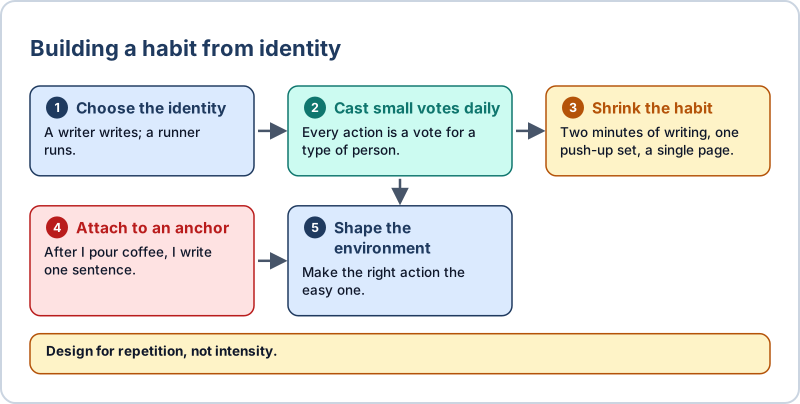
Most habit attempts fail because they start with outcomes — lose weight, write a book — instead of identity. Today you learn the more durable approach: decide who you are becoming, then let small repeated votes for that identity do the compounding.
Outcomes Follow Identity Not the Reverse
An outcome goal ends when reached or abandoned; an identity persists. Whoever says I am trying to quit sugar negotiates daily; whoever says I am not a dessert person has nothing to negotiate. Choose the identity behind each habit you want: a writer writes, a runner runs, a calm person pauses before replying. The behavior becomes evidence of who you are rather than a chore you owe yourself.
Cast Small Votes Daily
Every action is a vote for a type of person, and elections are won with many small votes, not one heroic ballot. Shrink each habit until it is almost trivially easy — two minutes of writing, one push-up set, a single page. Trivial versions feel pointless, yet they establish the voting pattern; scale comes once showing up is automatic. Research suggests automaticity takes roughly a couple of months of repetition, varying widely by person — so design for repetition, not intensity.
Engineer the Cue and the Environment
Attach each habit to an existing anchor — after I pour coffee, I write one sentence — and shape your environment so the right action is the easy one: instrument out, shoes by the door, phone in another room.
Action Step
Write one sentence naming the identity you are building, then define its two-minute daily version and the existing routine it attaches to. Cast the first vote today, however small.
Educational content only. Tactics and tools change — treat everything here as a starting point to test in your own situation. No specific outcome or income is promised.